Why Does Granite Have Different Colors? A Complete Guide to Every Shade & Its Mineral

Granite’s color comes from the ratio of minerals inside it — mainly quartz, feldspar, mica, and amphibole. More feldspar or quartz produces lighter shades (white, pink, beige); more iron- and magnesium-rich minerals like biotite or amphibole produce darker shades (black, grey, green). Because the mineral mix varies by quarry, no two granite deposits produce exactly the same color, which is why more than 200 distinct granite colors are traded worldwide today, over 150 of them quarried in India alone.
Granite remains the most specified natural stone for interior and exterior projects, and color variety is a major reason why. This guide breaks down exactly which minerals create each major granite color, so architects, fabricators, and importers can specify with more precision — and buyers can understand what they’re actually paying.
How Granite Forms — and Why Color Varies by Quarry
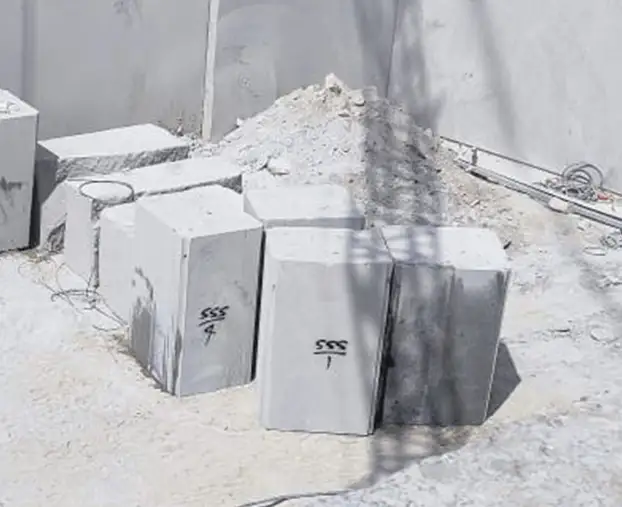
Granite is an igneous rock formed when magma cools slowly, over thousands to millions of years, deep under the Earth’s crust. That slow cooling allows large, visible mineral crystals to form — quartz, feldspar, mica, and smaller amounts of amphibole and other trace minerals.
The base recipe is similar everywhere. What changes from quarry to quarry — and even block to block — is the proportion of each mineral. Feldspar-heavy deposits trend toward pink, red, or beige. Quartz-heavy deposits trend lighter and more uniform. Deposits rich in biotite, hornblende, or gabbro trend dark grey to black. This is also why granite from the same general region (say, Rajasthan or Andhra Pradesh) can still show meaningful color and pattern differences between quarries.
Granite Color Chart: Shade, Mineral, and Common Varieties
| Granite Color | Primary Mineral(s) | Common Varieties | Typical Use Case |
|---|---|---|---|
| Black | Gabbro, biotite | Absolute Black, Black Galaxy | Countertops, monuments, high-contrast facades |
| Pink & Red | Potassium feldspar, iron oxide | Imperial Red, Ruby Red | Statement countertops, flooring accents |
| Beige & Brown | Feldspar (varying shades) | Tan Brown, Desert Beige | Flooring, cladding, neutral interiors |
| White | Quartz + feldspar (alabaster tones) | Kashmir White, Viscon White | Countertops, light-reflective interiors |
| Blue | Larvikite, labradorite (feldspar group) | Blue Pearl, Volga Blue | Premium accent surfaces, feature walls |
Black Granite: The Gabbro Exception
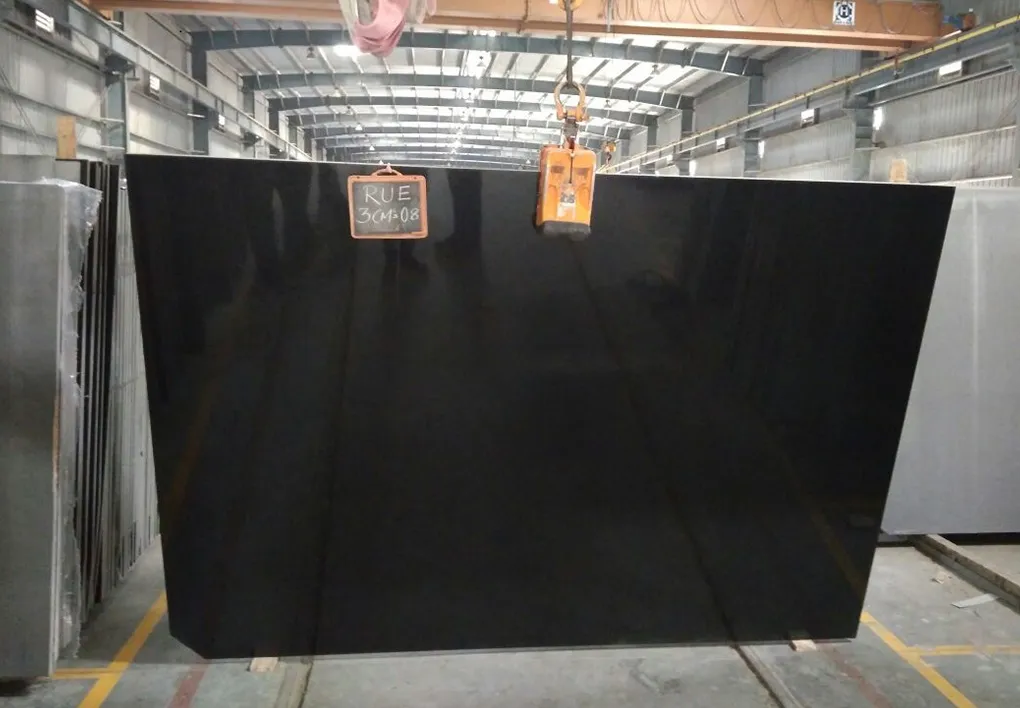
Black granite — think Absolute Black or Black Galaxy — is the most requested color worldwide for its clean, high-contrast look. Its color comes from gabbro, an igneous rock rich in iron and magnesium.
Here’s a detail most buyers never hear: by strict geological definition, a rock needs at least 20% quartz content to be classified as true granite. Most commercial “black granite” doesn’t meet that threshold — geologically, it’s gabbro, not granite. This doesn’t affect performance in any way; commercially graded black granite still delivers the density, polish & durability that a buyer expects. It’s a naming convention carried over from the stone trade, not a quality gap.
Pink & Red Granite: Feldspar and Iron Oxide
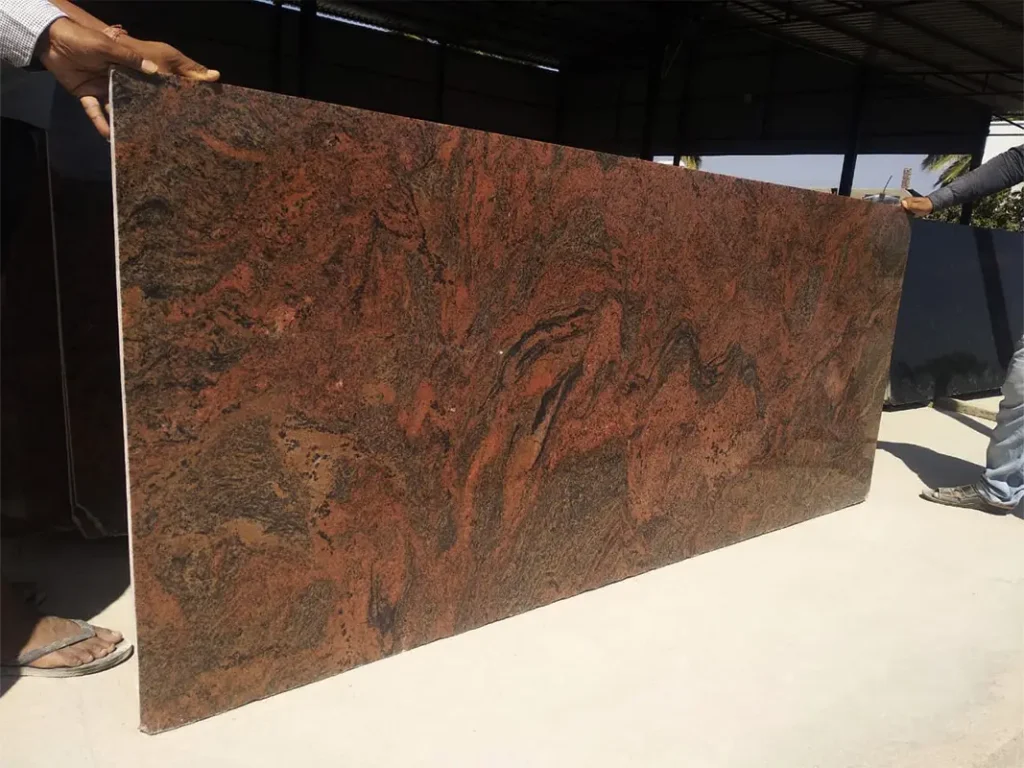
Pink and red granite have moved from a niche choice to a mainstream one, largely because processing & finishing techniques have improved enough to control consistency at scale.
Potassium feldspar produces the base pink and red tones. Where you see deeper, more saturated red, iron oxide is usually the added factor. Varieties with a more uniform red surface — with fewer streaks or spots — typically carry a higher concentration of quartz or lava-stone content, which makes the color read as more solid and even.
Beige & Brown Granite: The Feldspar Spectrum
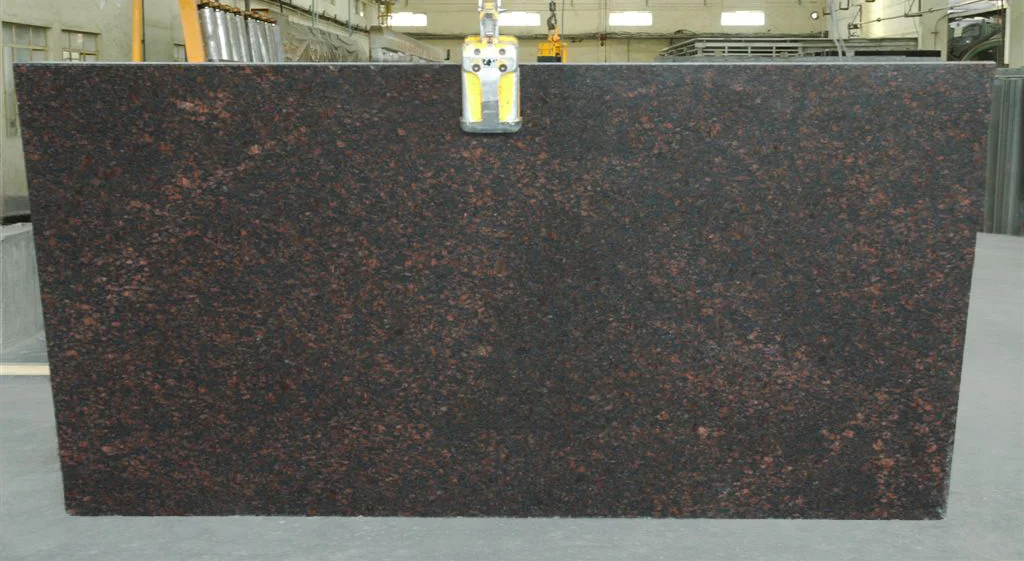
Beige and brown granite owe their entire color range to feldspar. Because feldspar itself occurs in a spectrum of shades, the same base mineral can produce a warm tan, a deep chocolate brown, or a muted desert beige, depending on which feldspar variant dominates the deposit. This is one reason beige and brown granites remain a safe, versatile specification — the color family is wide enough to match almost any design brief.
White Granite: Why “Pure White” Doesn’t Exist in Nature
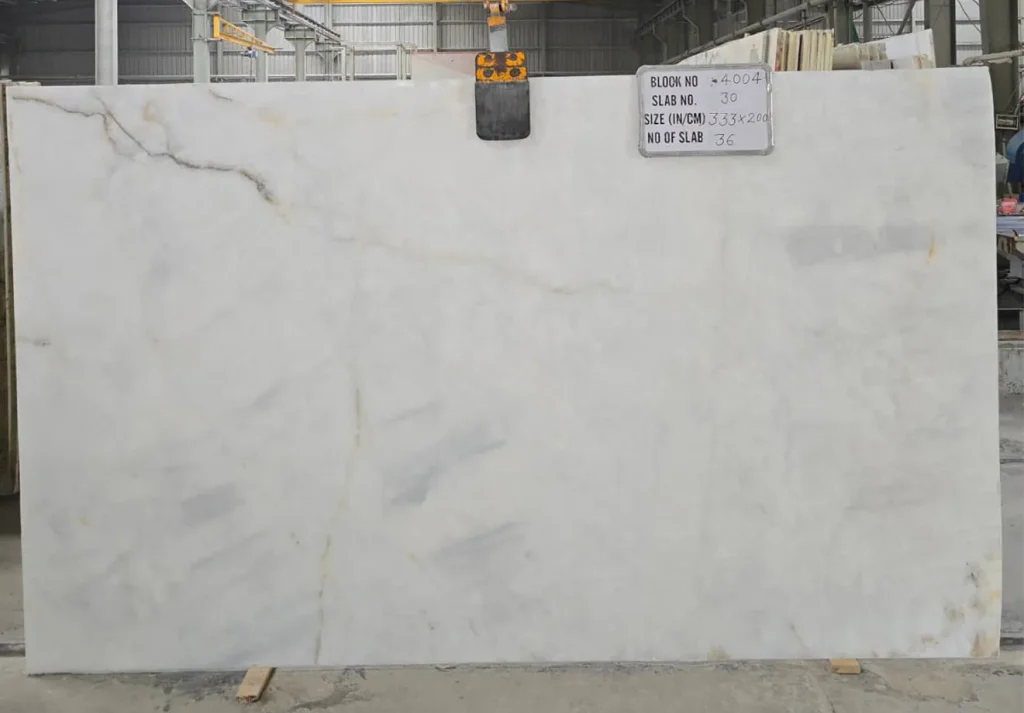
No granite is truly pure white — and any listing claiming otherwise is describing a quartzite or marble, not granite. What’s marketed as white granite is a blend of milky and creamy tones, produced by alabaster-toned feldspar combined with quartz.
Most white granite carries visible undertones:
● Black flecks or veining — caused by amphibole and/or gabbro content
● Brown undertones — caused by amphibole and/or feldspar content
Buyers sourcing “white granite” should expect and specify for these natural variations rather than treating them as defects.
Blue Granite: The Newest Trend
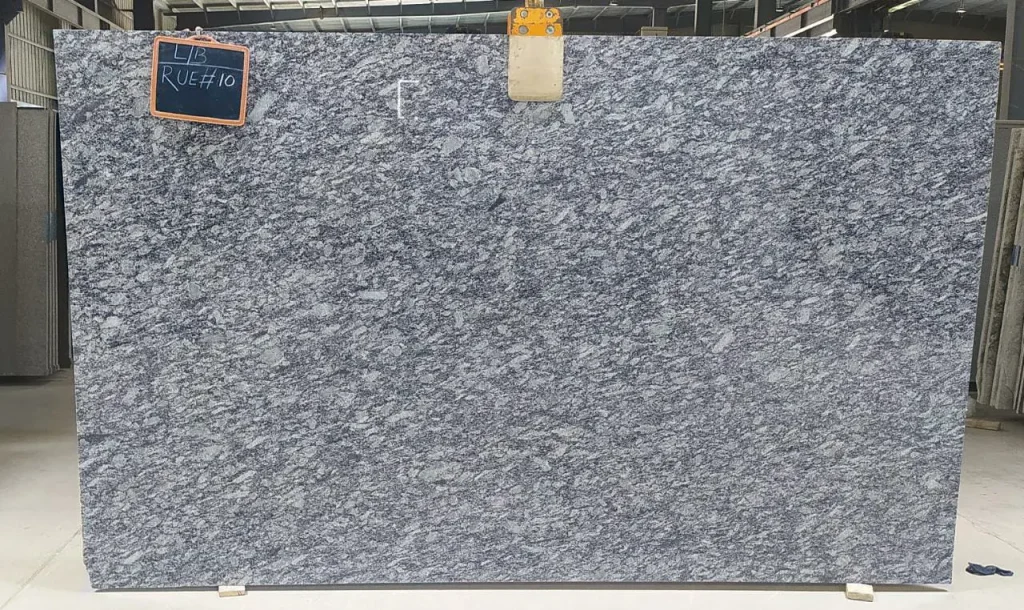
Blue granite is the most recent color to gain real commercial traction, largely as a feature-wall and accent material rather than a full-surface application. The blue-grey shimmer comes from larvikite and labradorite — both members of the feldspar family — which produce a distinctive light-play effect (schiller) as the angle of light changes. It pairs well with darker or neutral granite in mixed-material designs.
How to Choose a Granite Color for Your Project
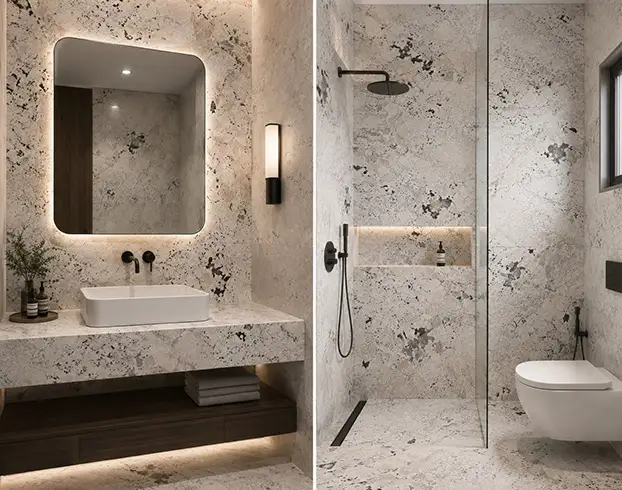
● For high-traffic commercial floors: darker colors (black, deep brown) hide wear & staining better in comparison to the lighter shades.
● For light-reflective interiors: white or beige granite maximizes brightness in low-light spaces.
● For a statement surface: red, blue, or patterned varieties work best as an accent rather than wall-to-wall coverage.
● For consistent large-batch orders: request slabs from a single quarry lot — mineral ratio, and therefore color, can shift between lots even within the same named variety.
Frequently Asked Questions
Granite’s color depends on the ratio of minerals it contains — mainly quartz, feldspar, mica, and amphibole. Different minerals carry different natural colors, so a higher concentration of one mineral over another determines the final shade.
Commercially, yes — it’s sold, fabricated & performs as granite. Geologically, most “black granite” is gabbro, since it doesn’t meet the 20% quartz threshold required for a true granite classification. The naming is a trade convention, not a durability or quality distinction.
Potassium feldspar produces the base pink and red tones. Deeper red shades usually indicate added iron oxide content.
No. All white granite has some percentage of black or brown blend undertones from amphibole, gabbro, or feldspar. The one that is marketed as “pure white” is typically quartzite, not granite.
India produces more than 150 distinct granite color variants, out of roughly 200 traded globally, making it one of the largest markets for granite color variety for export.
Explore Regatta’s Granite Color Range
All the colors covered above — along with 25+ years of processing and finishing expertise across our Andhra Pradesh and Rajasthan facilities — are available through Regatta Granites India. Browse the full product gallery or reach out directly for slab availability, custom finishes, and export quotes.