Stone of the Month: Atlantic White Granite

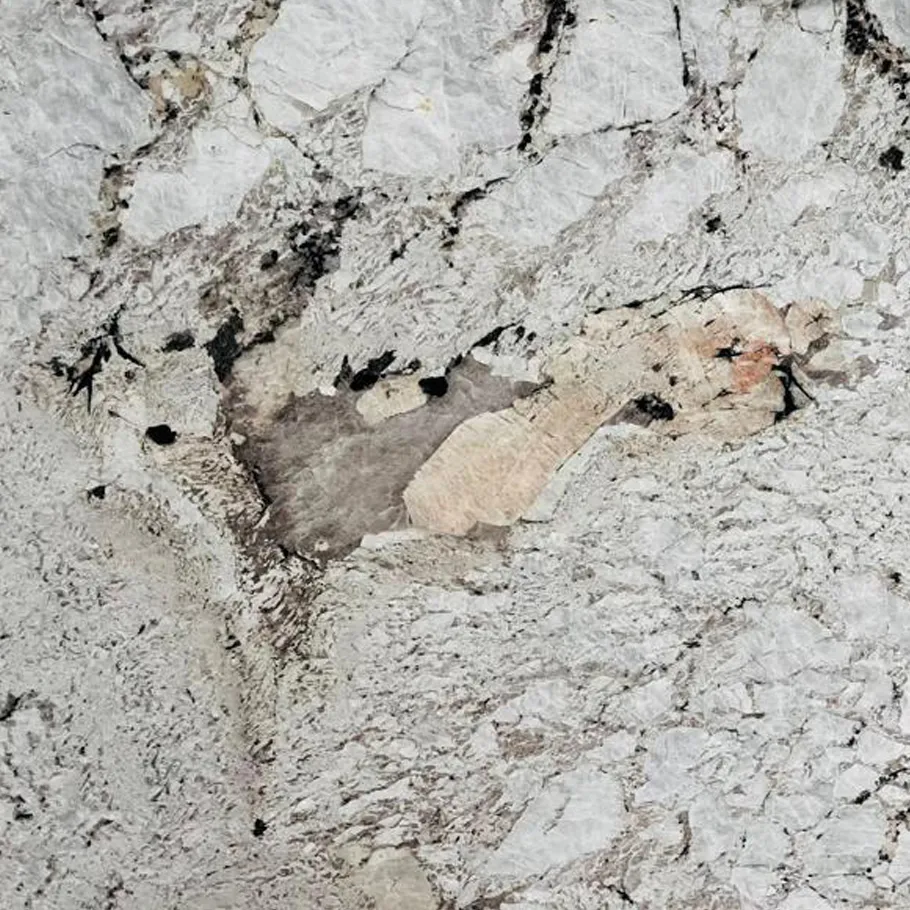
When it comes to natural stones that strike a balance between bold design and practical usability, Atlantic White Granite easily finds its place among the top choices. In recent years, architects and designers across global markets—from residential projects in the USA to commercial spaces in Europe and the Middle East—have shown a growing preference for stones that are not just durable, but also visually distinctive. Atlantic White Granite fits that requirement rather effortlessly.
Unlike many uniform stones, this granite doesn’t try to be subtle. It carries a strong visual identity—something that immediately stands out when used in interiors or exterior applications. With a light base tone ranging between white and soft grey, combined with sweeping darker veins and scattered mineral specks, it creates a natural contrast that feels both raw and refined at the same time.
Understanding Granite as a Natural Stone
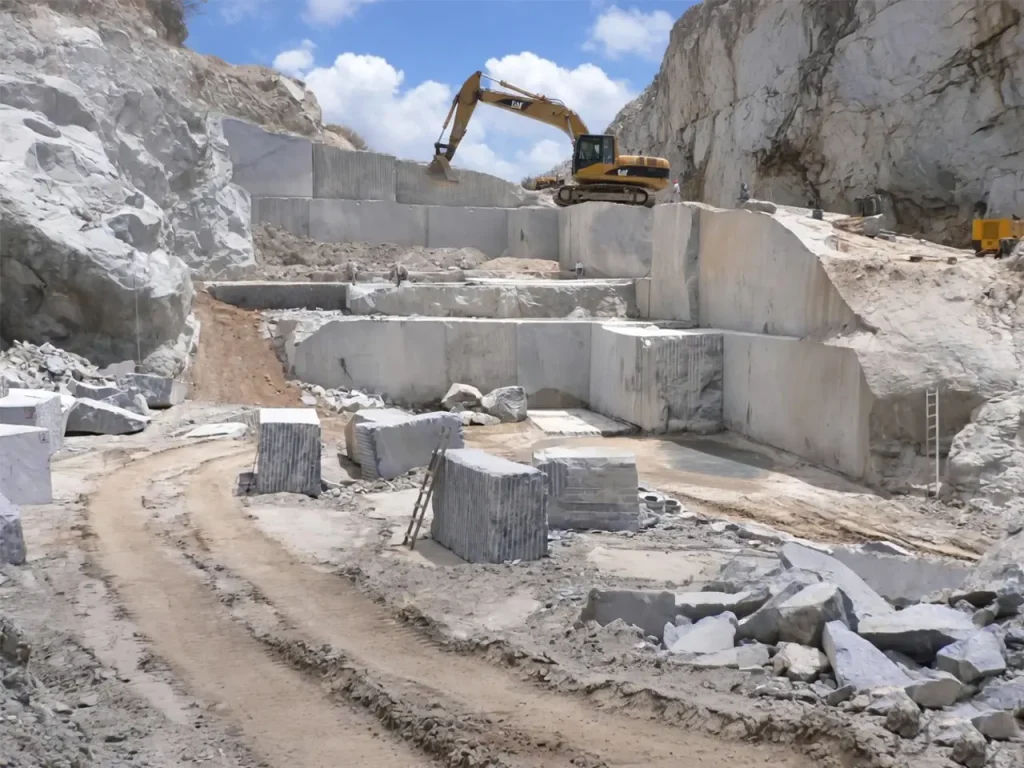
Granite, as most people already know, is not a man-made material. It forms naturally under the Earth’s surface when molten rock cools down slowly over time. That slow process is what gives it lasting strength—and also those visible crystals you see on the surface.
Because of this formation, granite tends to be tough. It doesn’t scratch easily, it can handle heat better than most materials available in the market, and doesn’t demand constant maintenance. That’s one of the main reasons it continues to be used so widely, even today.
Where Atlantic White Granite Comes From
This particular variety is mainly sourced from the quarries in the northern regions of India. Indian granite, in general, has been exported for decades now, so the supply chain is fairly well established.
What works in its favour is consistency. Buyers usually get what they expect in terms of pattern and quality, which isn’t always the case with natural stone.
After extraction, the blocks are sent to processing units where they are cut into slabs or tiles and finished depending on the requirement. Most manufacturers today are equipped with modern machinery, so the end result is quite refined.
What Makes It Different
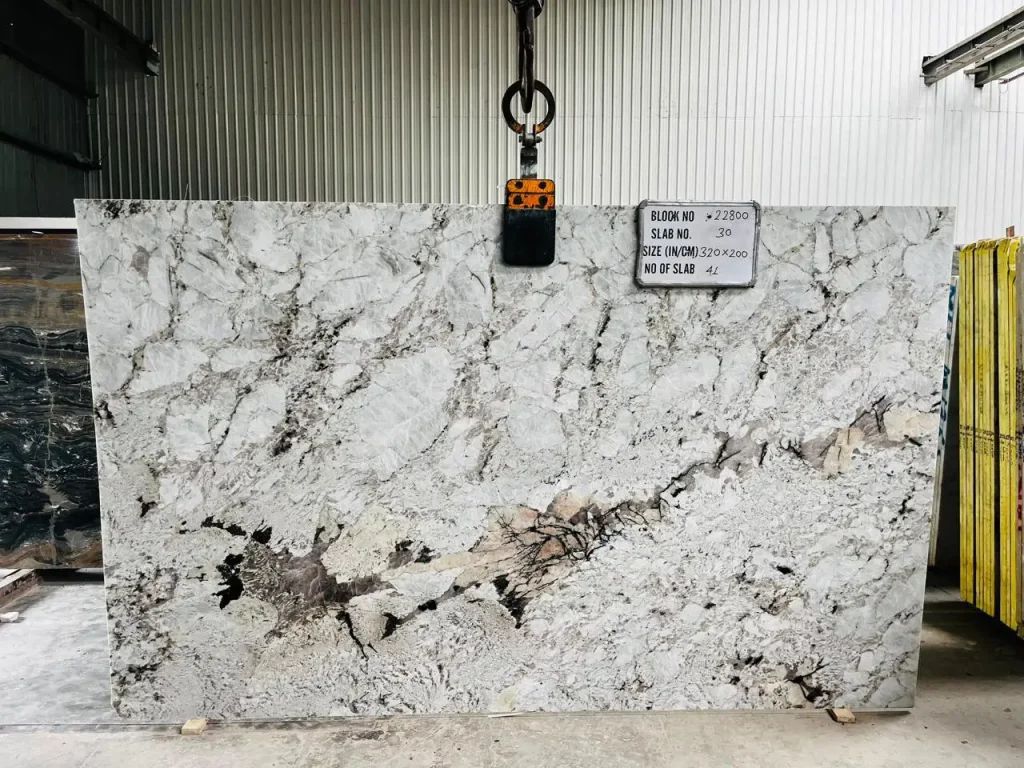
Atlantic White Granite is not a plain stone. It has movement—and that movement is what gives it character.
The background is usually white or light grey, but it’s the flowing darker veins that make it interesting. In some slabs, the pattern is subtle. In others, it’s more pronounced. This variation is actually what designers look for when they want something that doesn’t feel mass-produced.
Another thing—despite having a bold pattern, it doesn’t overwhelm the space. It somehow manages to sit well with different materials and designs, whether it’s wood, steel, or even glass.
Where It’s Commonly Used
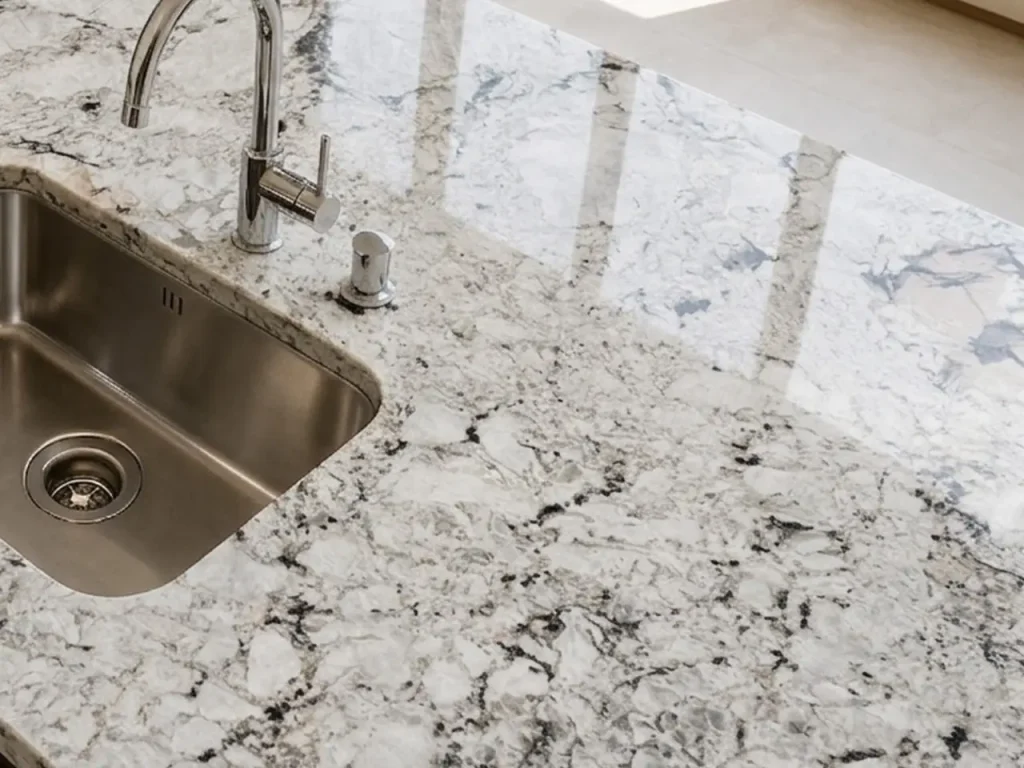
You’ll see Atlantic White Granite being used in quite a few places:
- Kitchen countertops are probably the most common
- Flooring in living areas or lobbies
- Wall cladding, especially for feature walls
- Bathroom vanities
- Even outdoor areas in some cases
It’s not limited to one type of application, which makes it easier to work with from a design point of view.
Processing and Finishes
Once the stone is cut into slabs, it goes through finishing. This is where the look can change quite a bit.
A polished finish brings out the colours and gives it a glossy surface. On the other hand, finishes like leathered or brushed tone things down a bit and add texture. For outdoor use, rougher finishes like flamed or bush-hammered are often preferred.
So, depending on how you finish it, the same stone can look quite different.
Sizes and Formats
Atlantic White Granite is generally available in:
- Large slabs (usually 2 cm and 3 cm thick)
- Cutter slabs
- Tiles in standard sizes
- Custom countertops and vanity tops.
Most exporters are flexible with sizing, especially for bulk or project orders, with established suppliers like Regatta Granites India offering extensive customization options and consistent export-quality standards.
Why People Still Choose It
There are plenty of granite options available in the market, so why still go with this one?
Part of the reason is visual. It has just enough pattern to stand out, but not so much that it becomes difficult to use.
The other part is practical. It’s durable, relatively easy to maintain, and works in both indoor and outdoor conditions. That combination is hard to ignore, especially for large projects where performance matters as much as appearance. The longevity of stone is a must for any large or commercial project.
Final Thoughts
Atlantic White Granite is not the loudest stone out there—but it doesn’t need to be.
It has a certain balance to it. A bit of movement, a bit of contrast, and enough strength to handle everyday use without much trouble. For architects and buyers looking for something reliable but still visually engaging, it usually ticks the right boxes.
And maybe that’s why it continues to stay relevant—without trying too hard.