Stone Slab Handling Damage: Why Most “Defects” Happen After the Factory, Not Inside It

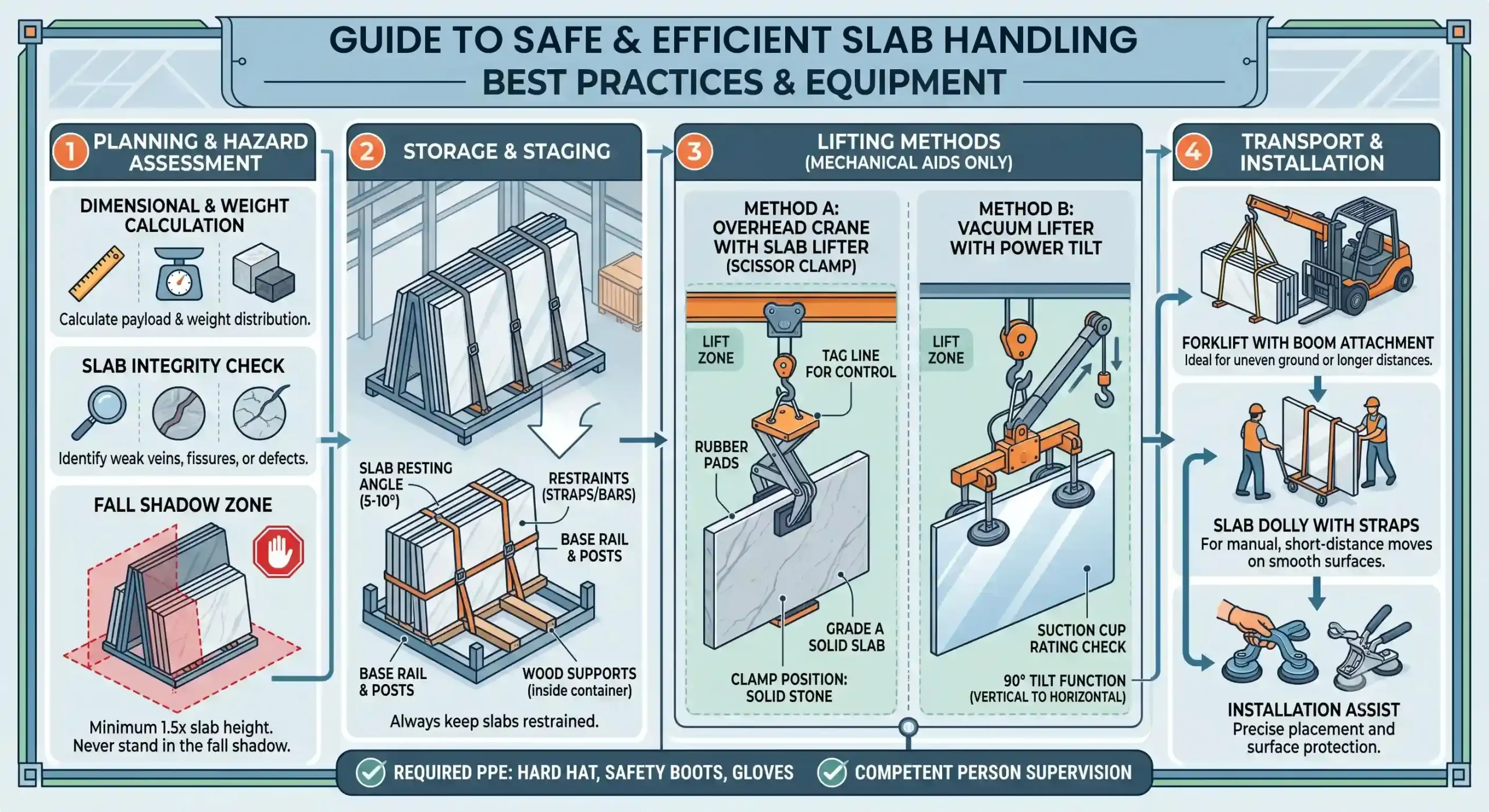
Most chipped corners, hairline cracks, and fine scratches on natural stone slabs are not manufacturing defects. They are handling damage caused by three preventable site mistakes: using the wrong lifting equipment, opening crates from the top only, and stacking slabs flat during storage. A slab that passes factory inspection can still arrive on site — or sit in storage for days — and pick up damage that gets wrongly logged as a QAQC defect.
A stone slab leaves the factory polished, squared, and within tolerance. It passes inspection. Three days later, it’s sitting on site with a chipped corner, and the first assumption is almost always the same: bad batch, bad supplier, bad QC.
Sometimes that’s true. But after enough site visits, a different pattern shows up — one that has nothing to do with the factory at all. A surprising share of the scratches, chips, and cracked corners flagged as “material defects” actually happen during stone slab transportation and storage, after the slab has already passed every check. The damage is real. The cause is usually somewhere else.
Where Stone Slab Damage Really Happens
Natural stone is most vulnerable in the few hours between leaving the truck and reaching its final resting spot before installation. This unloading and storage window involves more touchpoints than any other stage of the supply chain — different hands, different equipment, often a rushed schedule. Three avoidable habits cause most of the damage.
1. Using the Wrong Lifting Equipment
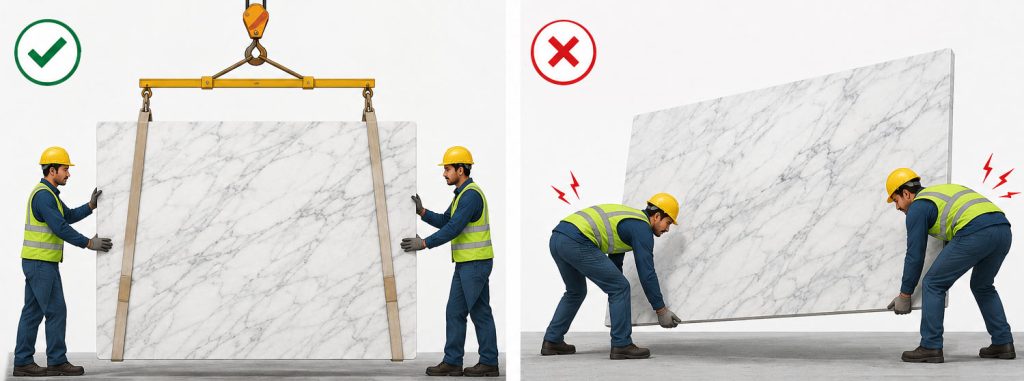
Slabs are routinely lifted with whatever is on hand: wire rope slings, hooks, or a few workers carrying the piece by hand. Wire rope and hooks concentrate enormous force onto a single point of contact — and on a stone slab, that point is almost always a corner or an edge, the two most fragile features on the entire piece.
The fix: A flat sling rated for the load, a suction-cup lifter, or an A-frame trolley spreads the same load across a much wider area, so the slab barely notices it’s being moved. With a hook and a cable, every lift is a small bet against the corner.

2. Opening the Crate the Wrong Way
The instinct is to pry open the top of a crate and start pulling pieces out. With no front access, every piece has to be dragged at an angle past its neighbors to come free. Polished stone dragged across polished stone is one of the most reliable ways to put fine scratches across an otherwise perfect face. Because the scratches are often shallow, they don’t show up until the light hits the installed surface the wrong way — well after anyone can say when it actually happened.
The fix: Open both the top and the front of the crate so every piece can be lifted straight up and clear, with nothing to drag against.
3. Stacking Slabs Flat
Once slabs are out of the crate, how they’re stored until installation matters just as much as how they were unloaded. Stacking slabs flat, one on top of the other, turns ordinary site handling into a slow-motion collision: every piece moved or restacked drags against the one beneath it. Even sitting still, flat-stacked slabs transfer point loads at every contact spot — exactly how hairline corner chips appear with no obvious event to blame.
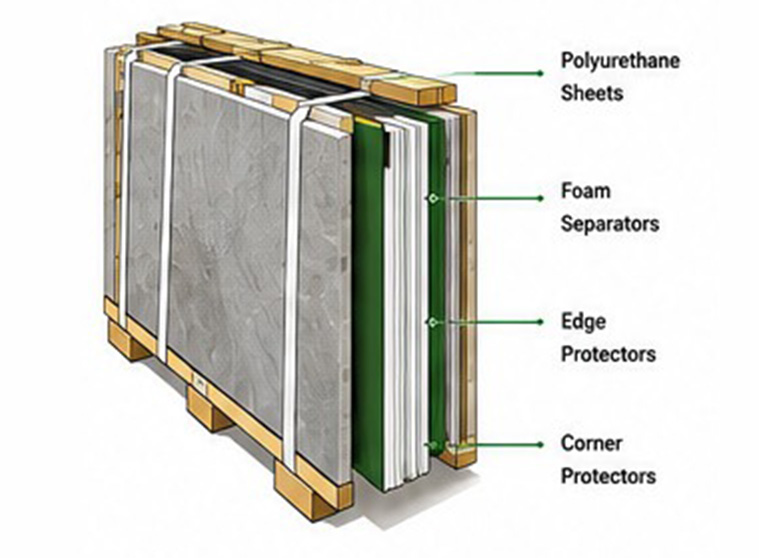
The fix: Store slabs vertically, racked against a stable A-frame with foam or rubber between every piece, so they simply aren’t touching each other anymore.
Why Handling Damage Gets Misdiagnosed as a Factory Defect
None of this is about assigning blame after the fact — by the time a damaged slab shows up in a QAQC report, that conversation is already overdue. It matters earlier because these three causes are genuinely easy to prevent, and because misdiagnosing handling damage as a manufacturing defect costs everyone time: material gets contested instead of installed, unnecessary replacement orders get raised, and project schedules absorb a delay that better unloading practices would have avoided entirely.
The fix isn’t more inspection. It’s making sure the people physically moving the material — sometimes a different crew on every delivery — know the three things that matter most: lift it properly, open the crate from two sides, and never let it lie flat.
FAQ: Stone Slab Handling Damage
Is a chipped stone slab always a factory defect? No. Chips, cracks, and fine scratches found on site are frequently caused by on-site handling — improper lifting, wrong crate-opening technique, or flat stacking — rather than a manufacturing fault.
What’s the most common cause of scratches on polished stone slabs? Dragging one polished slab across another, which typically happens when a crate is opened only from the top, and pieces have to be pulled out at an angle.
How should natural stone slabs be stored on site? Vertically, racked against a stable A-frame with foam or rubber padding between each piece — not stacked flat on top of one another.
What equipment should be used to lift stone slabs? A load-rated flat sling, a suction-cup lifter, or an A-frame trolley. Avoid wire rope slings and hooks, which concentrate force on corners and edges.